Is United Premier Status Worth It in 2026?
A clear-eyed look at what United Silver, Gold, Platinum, and 1K actually deliver — and which flyers get real value from chasing each tier.
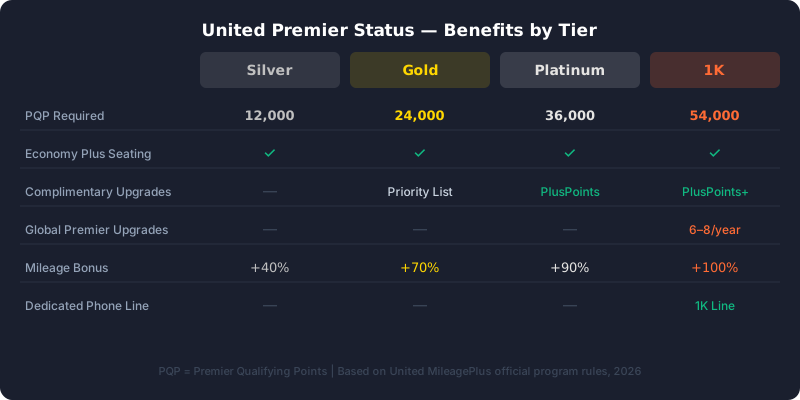
Quick Answer
United Premier status is worth it if you fly 15+ United segments annually — Silver delivers real value through Economy Plus seating, Gold adds upgrade priority, and Platinum is the sweet spot where complimentary PlusPoints upgrades kick in.
The honest answer is: it depends entirely on how much you fly United and what you value. A road warrior doing 80 segments a year gets enormous value from Platinum. Someone flying four times annually will struggle to justify chasing even Silver. Here's a straightforward breakdown of what each tier actually delivers in 2026.
The Cost of Each Status Tier
Before weighing benefits, you need to know what status costs. Each tier requires Premier Qualifying Points (PQP) and Premier Qualifying Flights (PQF) — or enough card spend to waive the PQF requirement.
Premier Silver 12,000 PQP + 4 PQF (or $3,000 card spend for PQF waiver)
Premier Gold 24,000 PQP + 24 PQF (or $6,000 card spend)
Premier Platinum 36,000 PQP + 36 PQF (or $9,000 card spend)
Premier 1K 54,000 PQP + 54 PQF (or $14,000 card spend)
At roughly 1 PQP per dollar of base fare in Economy, 12,000 PQP means spending $12,000 on base fares — or a mix of flying and credit card earning. Use the PQP calculator to figure out where you stand based on your actual travel plans.
Premier Silver: The Starting Point
Silver gives you the basics: complimentary Economy Plus seating on United and United Express flights, priority check-in and security lanes, and Premier Access boarding (Group 2). You also earn a 40% mileage bonus on top of base miles.
The value proposition depends heavily on how often you pay for Economy Plus seats. If you're on 10 flights a year and Economy Plus would cost you $35–$60 per segment, Silver saves you $350–$600 annually. That's meaningful. But if you fly routes where Economy Plus is rarely available or you don't care about the extra legroom, Silver's value shrinks fast.
Verdict: Worth chasing if you fly 6–12 United segments per year and you'd otherwise pay for Economy Plus.
Premier Gold: Where the Upgrade Math Gets Interesting
Gold adds complimentary seat upgrades on domestic and short-haul international routes (MileagePlus upgrades, not complimentary first class upgrades — those require Platinum). You also get 70% mileage bonuses and 2 United Club one-time passes per year.
The upgrade situation at Gold is where most travelers get confused. Gold members are eligible for MileagePlus mile-based upgrades, but complimentary upgrades using PlusPoints start at Platinum. Gold is firmly in the middle: better than Silver, but the free first-class upgrades aren't there yet.
Gold does matter if you're frequently buying Economy tickets on routes where United's Polaris Business or United First sells for $200–$400 more. The waitlist priority puts you ahead of lower tiers and non-status passengers.
Verdict: Worth targeting if you fly 20–40 United segments annually and want priority on upgrade lists.
Premier Platinum: The Upgrade Sweet Spot
Platinum is where United status genuinely changes the travel experience. PlusPoints complimentary upgrade eligibility kicks in, meaning you're in line for free first-class upgrades on domestic routes without paying extra. You also get 90% mileage bonuses and higher priority on all standby and same-day change requests.
For a frequent traveler doing 40–60 segments per year on domestic routes, Platinum upgrades to first class clear regularly — not every flight, but often enough to matter. A domestic first-class ticket might be $200–$500 more than Economy. If your Platinum upgrades clear 30% of the time on 40 flights, you're getting the equivalent of 12 first-class upgrades you didn't pay for. At $300 average upgrade value, that's $3,600 in value.
Verdict: Strong value for travelers doing 40+ United segments annually. The PlusPoints upgrades make this the tier most road warriors actually feel.
Premier 1K: For the Dedicated United Traveler
At 54,000 PQP and 54 PQF, Premier 1K is a serious commitment. You get everything Platinum offers, plus Global Premier Upgrade certificates (usable on international routes to Polaris Business), dedicated 1K phone lines with agents who can actually solve problems, and confirmed same-day upgrades on select routes.
The 1K phone line alone has real value if you travel frequently and encounter irregular operations. Being on hold for 2 minutes instead of 45 during a storm delay is worth something when you're trying to rebook.
Global Premier Upgrades can clear on transatlantic routes, though availability is limited. If you're flying to Europe or Asia in Economy several times a year, one upgrade to Polaris Business — easily worth $1,500–$3,000 — can justify the 1K chase.
Verdict: Worth it for travelers flying 70+ United segments annually, especially those with international routes where GPU upgrades add real value.
The Honest Calculation
For most travelers, the sweet spot is Gold or Platinum. Silver is easy to achieve if you fly United regularly, but the benefits plateau quickly. Gold provides a solid middle ground. Platinum is where status materially changes your experience.
To see whether the math works for your situation — how many flights it takes to reach each tier, and whether the card spend shortcut changes the equation — run your numbers through our Premier status calculator. It shows you exactly how close (or far) you are from each tier based on your planned travel.
One more thing: status isn't just about the year you earn it. The habits you build — flying United more consistently, choosing fare classes that earn better, using the right credit card — compound over time. A Gold member this year often finds it easier to reach Platinum next year.
For a deeper look at whether Silver or Gold makes more sense for your specific flying pattern, see our Silver vs. Gold comparison guide.